Vaginal dryness is no joke. How an intimate cream can help.
The good news is that you don’t have to put up with it. Alongside medical treatments such as vaginal oestrogen, one of the simplest things we suggest is an intimate cream. Gynaecologists and pelvic health physiotherapists have been recommending them to patients for years, and now they’ve started appearing on pharmacy shelves with many more options for women.
Lubricant or intimate cream?
A lubricant is designed to reduce friction during sex. An intimate cream does that too, but it’s also a moisturiser for the delicate skin of the vulva and vagina. You can use it every day, whether or not you’re sexually active.
Who can benefit?
Vaginal dryness is usually linked to lower oestrogen levels, and that can happen at several stages of life:
Perimenopause and menopause: Dryness, itching and discomfort during this stage is what we call ‘genitourinary syndrome of menopause’ or GSM. Unlike hot flushes, these symptoms often don’t ease with time, so many women need ongoing support well beyond menopause.
After having a baby and while breastfeeding: Oestrogen is naturally lower at this time. An intimate cream can also be used for perineal massage in late pregnancy.
During and after cancer or gynaecological treatment: Some treatments bring on menopause suddenly, sometimes at a young age, and an intimate cream can help ease that dryness that often follows.
Pelvic organ prolapse, pessaries and dilators: A cream can protect sensitive tissue and make inserting a pessary, vaginal dilator or pelvic floor device more comfortable.
Why specialists recommend intimate creams
The International Menopause Society recommends non-hormonal vaginal moisturisers and lubricants alongside vaginal oestrogen to manage GSM. They can be used on their own for mild symptoms, on the days in between hormonal treatment, or by women who can’t or would rather not use hormones.
What matters is choosing the right one. Many lubricating products contain preservatives, fragrances and colourings which can irritate tissue that’s already sensitive.
About Olive & Bee
Those irritating additives were exactly the problem Australian Pelvic Health Physiotherapist Claire Osterstock kept running into. Her patients often asked her what to use, and she wasn’t happy with the synthetic, heavily preserved products available. She would suggest olive oil from the kitchen – it worked, but it was runny and messy.
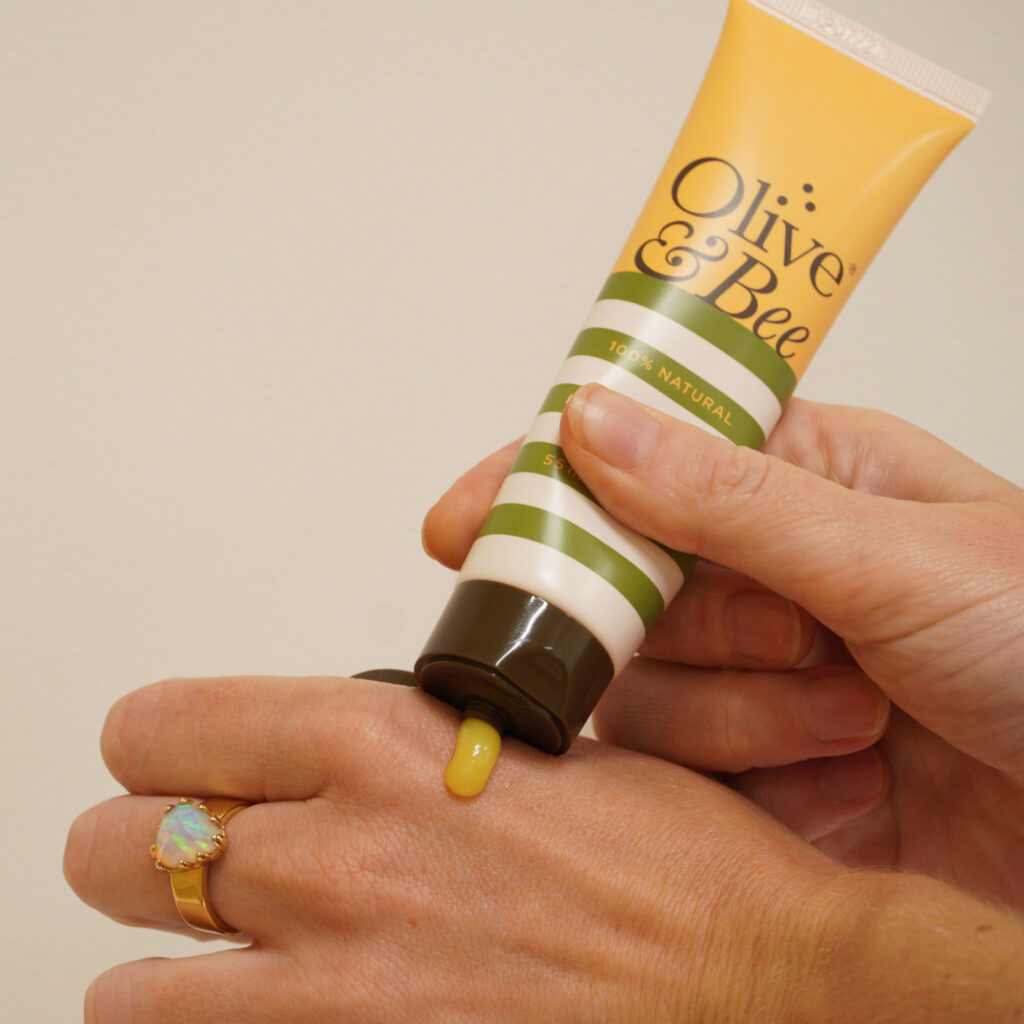
Working with a compounding pharmacist, she developed a thicker, easier-to-use version: Olive & Bee Intimate Cream. It has just two ingredients – extra virgin olive oil and beeswax – and no preservatives, parabens, fragrance or colours. Because it contains no water, it stays fresh without preservatives and won’t disrupt vaginal pH.
Olive & Bee first reached women through gynaecologists and pelvic physios who recommended it to their patients, and health professionals are still its biggest advocates. It was also designed to look more like a hand cream than a “lubricant”, so it’s easy to buy without feeling self-conscious.
A few things to know:
- It’s oil-based, so it isn’t compatible with condoms.
- Shake before use, as the natural formula can separate.
- It may mark some fabrics; a panty liner can help.
Where to buy
You can buy Olive & Bee Intimate Cream from the COGA shop as well as select pharmacies around New Zealand.
Please don’t ever feel too embarrassed to bring it up – it’s a really common concern, and there’s plenty that can help. If dryness or discomfort isn’t improving with an intimate cream, or you notice bleeding, pain or other new symptoms, talk to your GP or make an appointment with one of our gynaecologists.
Read more: Menopause Knowledge Hub